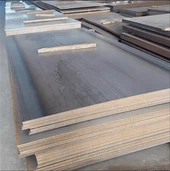
The thickness range of Q235NH Corten Steel directly defines its applicability in civil engineering projects-from thin plates for decorative cladding to thick sheets for load-bearing supports. For engineers, buyers, and fabricators, clarifying the standard supply thickness is critical for project design, cost control, and procurement planning. What is the typical thickness range for standard supply of Q235NH? Based on GB/T 4171 standards and global industrial supply practice, the core conclusion is clear: Q235NH Corten Steel is typically supplied in a thickness range of 3mm to 50mm for standard orders, with extended ranges (up to 90mm) available via customized production, all compliant with Chinese quality norms. Below is a concise, actionable breakdown.
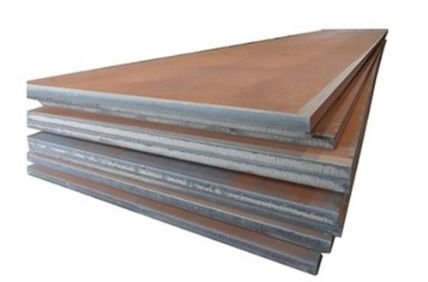
Key Background: Standard Supply Thickness & GB/T 4171 Compliance
Q235NH's standard thickness range is regulated by GB/T 4171《Weathering structural steels》, ensuring consistency across manufacturers and compatibility with common processing techniques. The standard supply scope is optimized for mass production and universal application:
: 3mm to 50mm (hot-rolled or thermo-mechanical controlled rolling, TMCP). This range covers over 80% of Q235NH applications, including guardrails, building facades, small bridge components, and storage tank panels.
: Standard thicknesses are paired with widths of 1220mm, 1500mm, or 2000mm, and lengths up to 6000mm (customizable). This dimensional combination supports efficient cutting and assembly for most civil projects.
: All standard thicknesses (3-50mm) come with mill test reports (MTR) confirming compliance with GB/T 4171, including mechanical properties and corrosion-resistant element content.

1. Thin Plates (3mm-16mm): Decoration & Light-Structure Use
: Excellent formability, suitable for cold bending, rolling, and plasma cutting. Thin plates have uniform grain structure, ensuring consistent weather resistance across the surface.
: Outdoor decorative cladding, billboard frames, lightweight guardrails, and non-load-bearing wall panels. For example, 6-10mm plates are commonly used in municipal landscape structures.
2. Medium Plates (16mm-50mm): Load-Bearing & Structural Components
: Balanced strength and ductility, meeting low-to-medium load requirements. Plates over 20mm often adopt TMCP工艺 to refine grains, avoiding toughness degradation.
: Small bridge girders, storage tank shells, heavy-duty guardrail posts, and steel structure brackets. 30-50mm plates are ideal for components bearing static loads (e.g., building foundations exposed to the outdoors).
3. Thick Plates (50mm-90mm): Customized Heavy-Duty Scenarios
: Available only via custom hot rolling, requiring strict process control (slow cooling, normalization) to ensure uniform internal structure. Thicknesses over 50mm may see a slight drop in yield strength (to >=215MPa for 40-60mm plates) but remain compliant with GB/T 4171.
: Specialized load-bearing components like bridge piers, industrial equipment bases, and high-altitude support structures. These require additional impact testing at -20℃ to confirm toughness.

Understanding how thickness affects Q235NH's processability helps avoid production issues:
: Plates <=20mm require no preheating; 20-50mm plates need 80-120℃ preheating to prevent cold cracks; thick plates (>50mm) need post-weld stress relief annealing.
: Thin plates (3-16mm) suit plasma cutting for high efficiency; medium-thick plates (16-50mm) work with flame cutting; thick plates (>50mm) require optimized flame cutting parameters to avoid edge淬硬.
: Thickness does not significantly affect patina formation-all ranges form a protective rust layer in 1-2 years in mild atmospheres.

Standard vs. Custom: For projects with tight timelines, choose standard thicknesses (3-50mm) for immediate supply; customized thick plates (50-90mm) require 2-4 weeks of production lead time.
Z-Direction Performance: For thick plates (15-60mm) used in welded structures, specify Z15/Z25/Z35 Z-direction properties to avoid lamellar tearing.
: Custom thick plates (>50mm) cost 15-25% more than standard ranges due to specialized processing, so balance thickness needs with budget.

In summary, Q235NH Corten Steel's standard supply thickness ranges from 3mm to 50mm, with customizable options up to 90mm for heavy-duty needs. Each thickness subrange aligns with specific applications and processing requirements, ensuring optimal performance and cost-effectiveness. By selecting the right thickness based on load, processing, and delivery needs, users can maximize the material's practical value in outdoor projects.